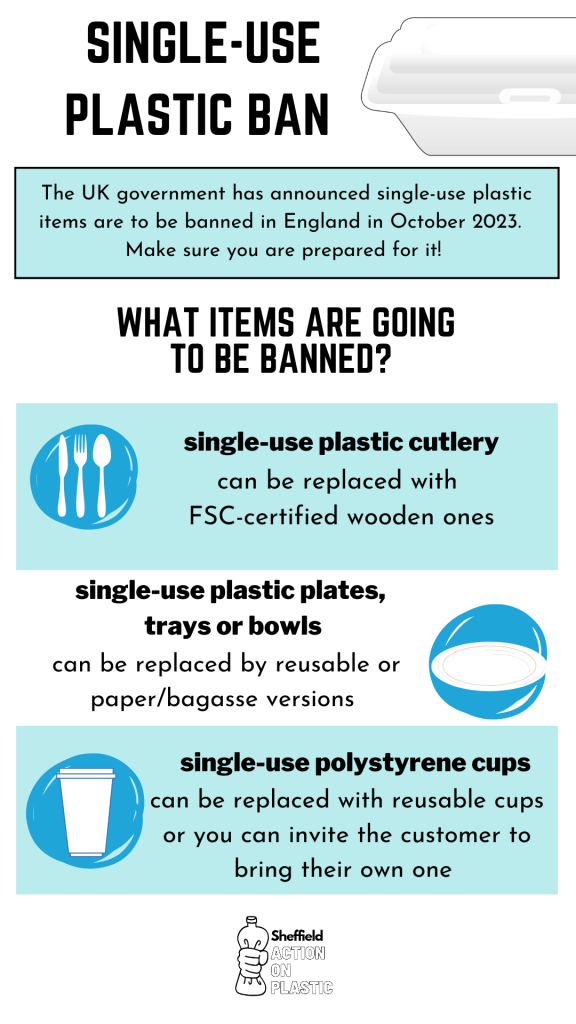
In January 2023, the UK Government confirmed that single-use plastic items are to be banned in England in a move to reduce pollution.
These items are:
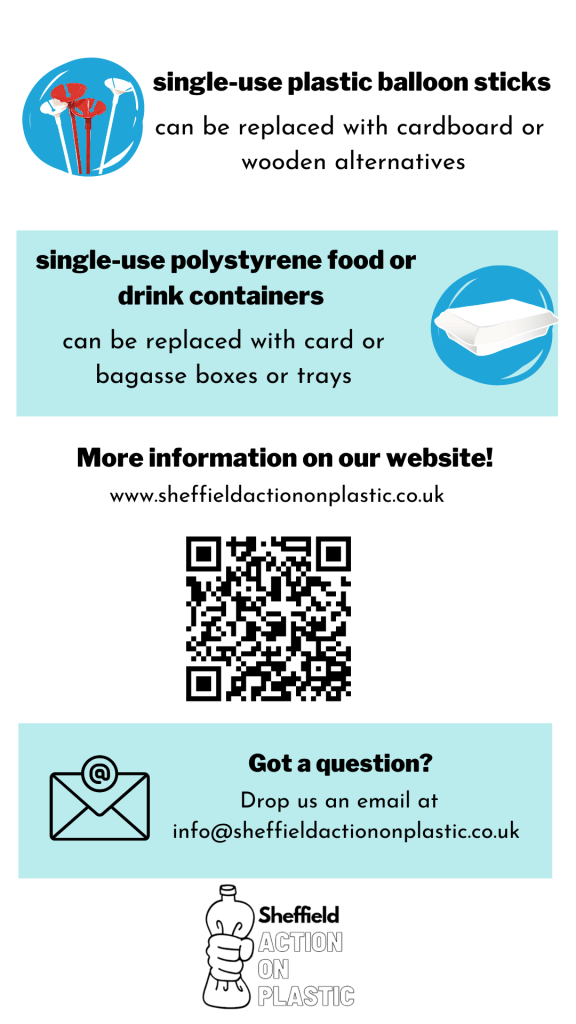
- Single-use plastic balloon sticks
- designed or intended to be attached to and support balloons
- made wholly or partly from plastic
- not designed or intended to be re-used
- Single-use plastic cutlery
- designed or intended to be used as, or in the same way as, a knife, fork, spoon or chopstick
- made wholly or partly from plastic
- not designed or intended to be re-used
- Single-use plastic plate, tray or bowls
- designed or intended to be used as a plate, tray or bowl,
- made wholly or partly from plastic
- not designed or intended to be re-used
- Single-use polystyrene cups
- made wholly or partly from expanded or foamed extruded polystyrene
- not designed or intended to be re-used
- Single-use polystyrene food or drink containers (a receptacle such as a box, with or without a lid or cover)
- made wholly or partly from expanded or foamed extruded polystyrene
- not designed or intended to be re-used
- used to contain food or drink that is ready to be consumed without further preparation
This ban will come into place in October 2023 and mainly affect hospitality businesses, restaurants, cafés, and takeaways.
If you run a restaurant, takeaway business, or food van, you’ll soon need to find alternatives to any plastic plates, cutlery, and polystyrene containers you use for your business.
Be sure to do an inventory of the items you’ll need to change and cost up alternatives.
For example, you could:
- encourage customers to bring their own cutlery and containers
- use alternatives like bamboo or cardboard
- offer a discount to people who bring their own coffee cups
Alternatives can be more expensive, so make sure you budget and plan for any changes to your supply costs.
If you make three or more plastic-free swaps, you can become a Plastic Free Champion, receiving an award and free publicity for your business.
If you still need to use single-use, disposable materials due to your ordering system or other factors, be sure to consider these things:
- Where are your customers consuming your food and putting their takeaway containers after they have used them??
- If most of your takeaways are going to your customers home, think about what recycling facilities they will have available to them.
- Or, if they are going to be consumed close by, what’s on offer in your local public spaces? If your takeaways are likely to be eaten in the local park, could they become litter because of overflowing general waste bins?
We want to help make it as easy as possible for you to navigate the many packaging options available and reduce waste. City to Sea have created a detailed comparison of the options available including information on reusable, compostable and bioplastic packaging and advice on reducing single-use.
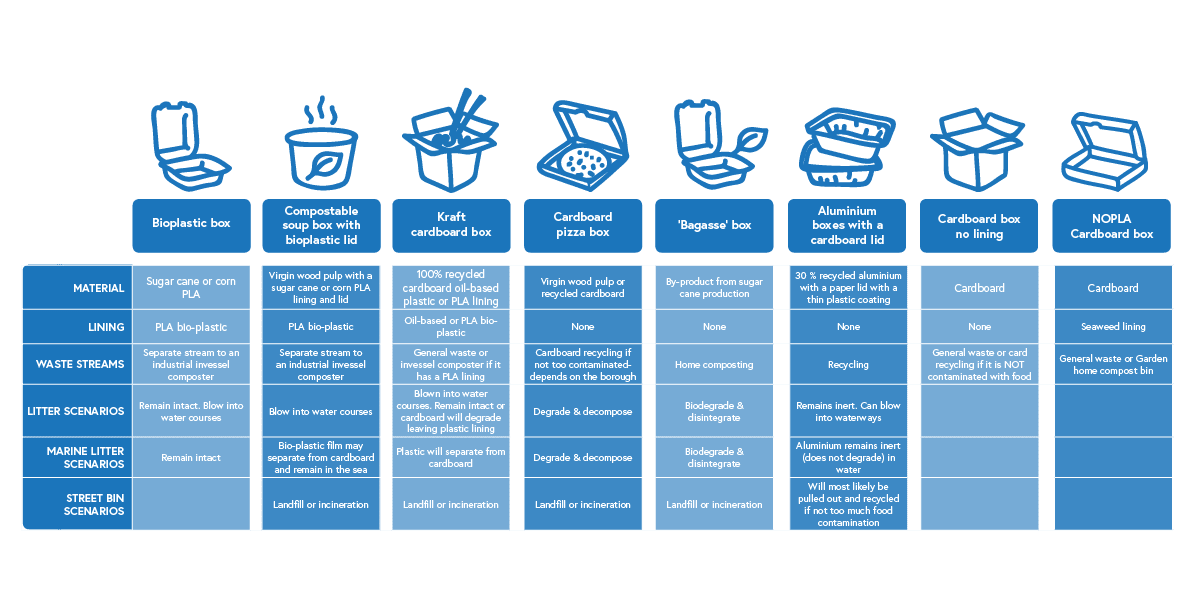
The most sustainable disposable options
| Food eaten at home | Food eaten on the go |
| CARDBOARD This usually has a thin plastic lining but can still be washed out and put in cardboard recycling, as long as it’s clean and free from grease marks – check out WRAP’s guidance on cardboard packaging for packaging that can be recycled. Remember, whatever packaging you use, food and grease contaminates all recycling (aluminium, plastic, glass, paper). Make sure to label packaging clearly to encourage consumers to clean it before putting in the recycling bin. | BAGASSE These soft paper-style boxes are not lined with any plastic or other material and will decompose naturally if they end up becoming litter. Bagasse is slightly absorbent but does not leak sauces. This can also go in home compost bins (but not food caddies. The reality is that in areas like parks there are usually only general waste bins which quickly overflow. All the waste in these bins will generally end up going for waste-to-energy incineration. So the focus should be on what happens if your item becomes litter. |
Did you know:
- Cardboard with food on it can’t be recycled in the cardboard recycling stream.
- Bagasse degrades the most easily but can last overnight with liquids/curries in, although it may discolour.
- Virgin aluminium ore is mined through strip mining which is very energy intensive and polluting.
- Only bagasse and cardboard pizza boxes will actually completely degrade if they become litter or marine litter.
- Cardboard must be clean and free from food to be recycled.
The most sustainable solution is reusables!
What about compostable bioplastics?
Whilst they might sound like the solution to plastic pollution, we have extensively researched compostable bioplastics and that is not the case. Most compostable bioplastics are actually pretty rubbish!
- They won’t compost or biodegrade if they become litter or marine litter as they need temperatures of 60 degrees plus – which obviously is not found in our parks, rivers or seas!
- They aren’t accepted in most household food recycling (the food caddy that gets collected) because the plants that process food can only process food and can’t tell a bioplastic from a petro-chemical plastic. It’s all just plastic to them! The conditions aren’t right for these bioplastics to compost either. To get your head around this, check out City to Sea’s guide to bioplastics.
- If compostable materials end do up in a general waste bin, they will end up going to waste-to-energy incineration (this is where most general waste goes) so they will not compost at all.
- The reality is that to actually get these materials composted, you’d need to find a recycling plant that will accept them.
- Vegware has found some composting plants in the UK that will take their packaging. But this is only available in 39% of UK postcodes and only for Vegware packaging. Any other brand of compostable packaging would need approval from a plant before they accept it because different packaging breaks down at different times.
Even if you do find a way to correctly dispose of compostable bioplastics, you will need to pay for this service and ask your customer to bring their takeaway packaging back to you. Which means they need to carry it around until their next visit. So they may as well carry a reusable that they can easily wash up at home! Clearly compostable bioplastics are not a simple solution to the single-use plastic problem.
| Item | Eat-in best practice | Takeaway best practice |
| Sauces | Put sauces in reusable containers and wash them after each use. | Make sachets request only. OR, put sauces in paper pots in the food box if requested. |
| Cutlery | Lay the table with reusable cutlery. | Ask customers if they need cutlery before automatically putting them in a bag. Opt for wooden cutlery if you need to give single-use out. Make sure it’s FSC certified. |
| Plates | Serve on reusable plates. | Choose a material without a plastic or bioplastic liner e.g. bagasse, no-PLA or a recycled cardboard box |
| Hot drink cups | Use china and reusable options where possible. | Accept customers own reusable cups |
| Glasses/cups | Default to reusable pint glasses/glasses. Reusable plastic options are available and can be washed in the same way after use. | Accept customers reusable pint glasses/cups. Introduce a deposit scheme for reusable glasses. |
Join the Refill Revolution
If you’re already accepting reusable containers, cups or offering free drinking water for your customers then make sure you’re signed up to the Refill campaign here.
- 85% of people would view businesses that offered Refills for food and drink a lot more positively.
- With over 350,000 app users signing up is a great way to drive footfall to your business.
- On average, someone who pops in to get a free drinking water refill will spend between £2.50 and £5 in store.
NOTE: Information on this page has been provided by City to Sea
 Sheffield Action on Plastic